
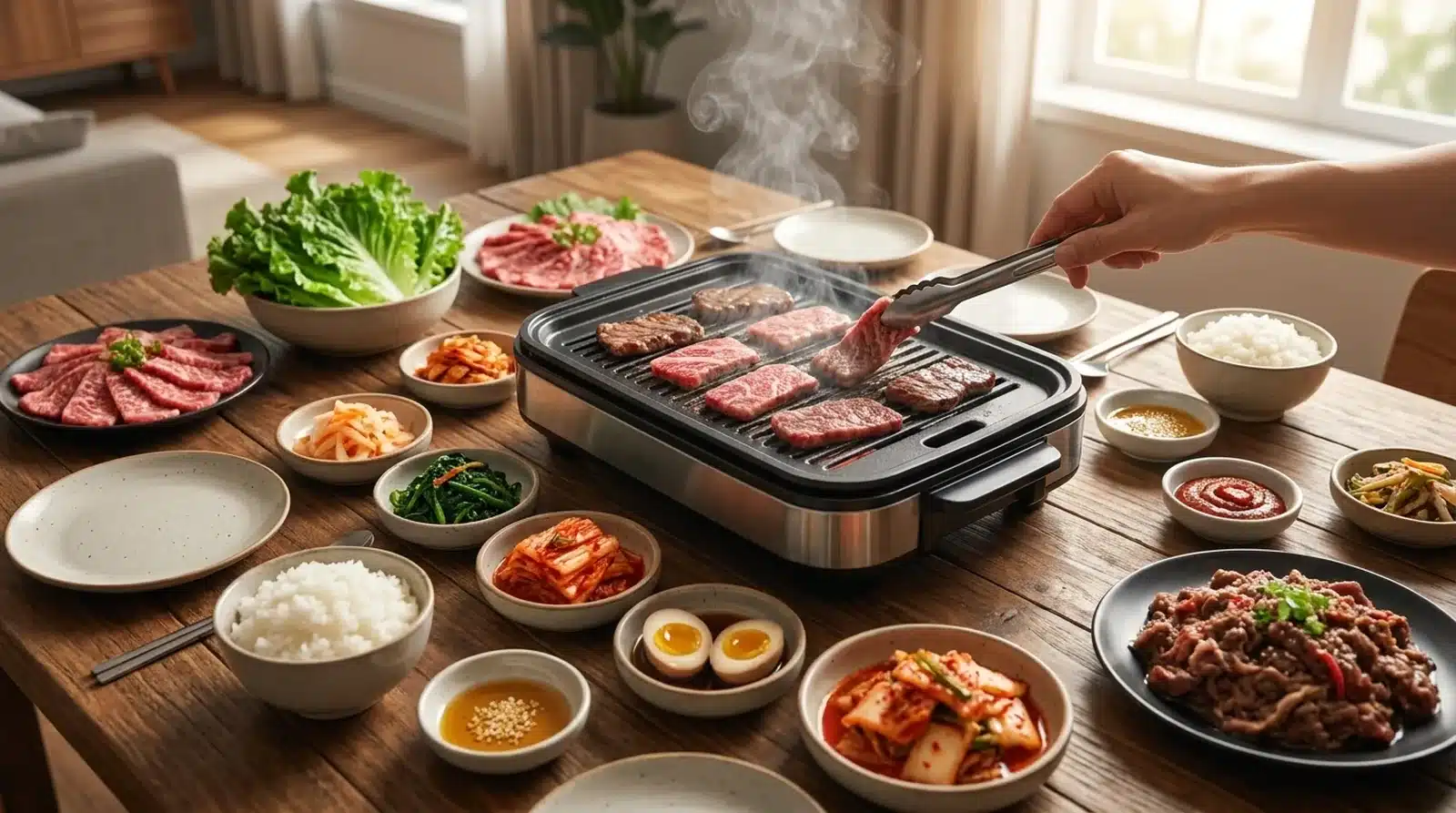
Korean BBQ at home is more than dinner. It’s a grill in the middle of the table, everyone cooking and picking as they go, a bit of smoke and a lot of talking. Done well, it’s the closest thing to a Korean BBQ restaurant without the booking, the queue or the bill at the end.
It’s also hard to get wrong. The meat does most of the work. What makes a night feel right is a few small things – the setup, the order you cook in, and knowing what to do with all those little side dishes. Here’s how we’d go about it.
First, what kind of night is it?
Start with the occasion, because it changes what you buy. A quiet Friday for two needs one grill and a couple of cuts. A birthday or a table of friends wants a proper spread – three or four cuts, a special one in the mix, and plenty of sides. Korean BBQ scales up and down happily, so match the meat to the mood rather than overbuying and eating leftovers for a week.
Charcoal or gas?
This is the first real decision, and both answers are right.
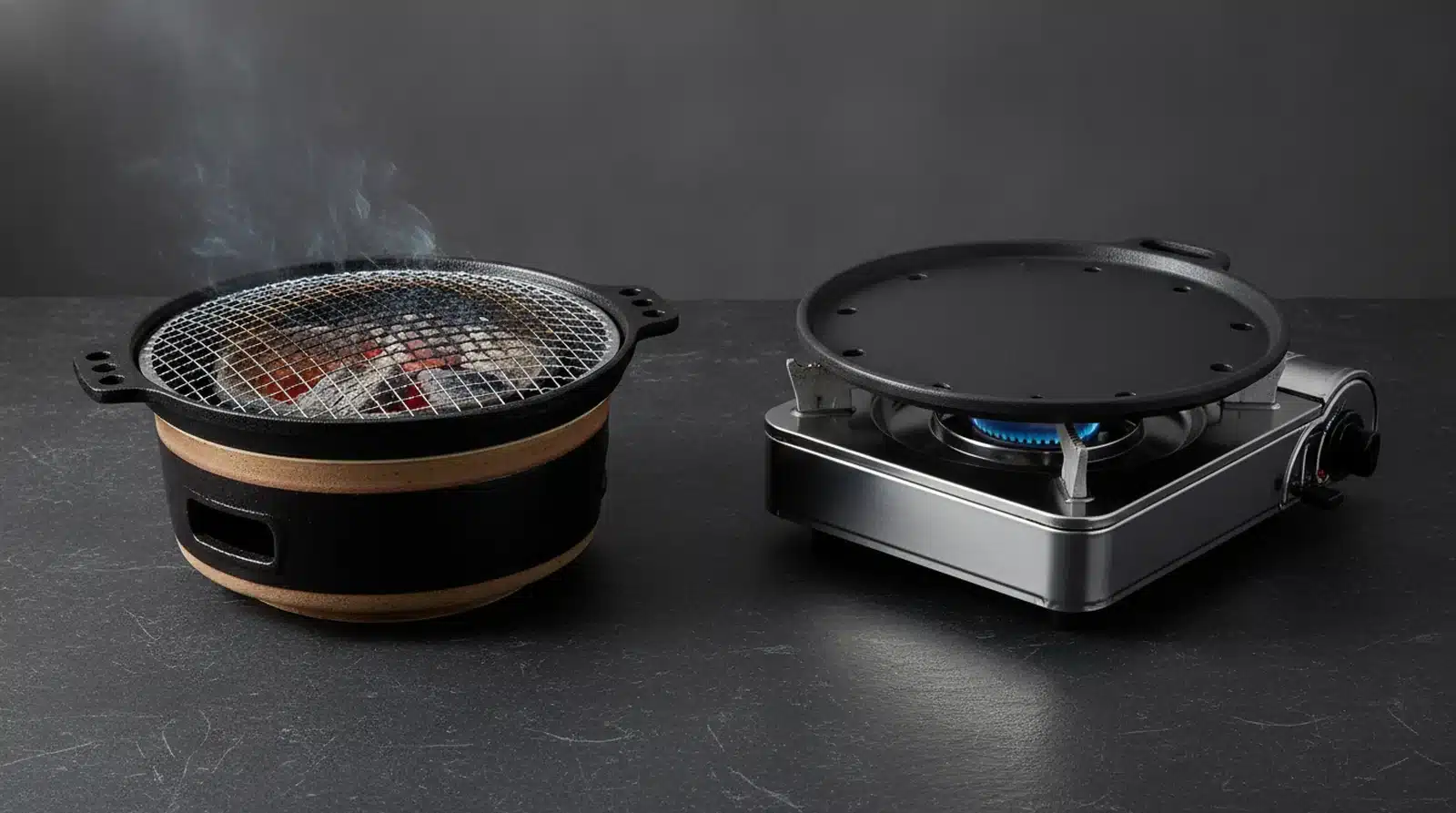
Charcoal gives you the flavour and the smell – that smoky edge that makes people go quiet on the first bite. It’s slower to get going, it’s messier, and it really wants to be outdoors or under a good rangehood.
Gas, usually a portable butane burner, is what most people reach for at home. It lights in seconds, holds a steady heat, and it’s happy on the kitchen table with a window open. Less romance, a lot less fuss.
Our honest take: butane for a weeknight and for indoors, charcoal when you’ve got the time, the space and something to celebrate. Charcoal tastes better and takes longer, like most good things.
The meat, and where people go wrong
The most common mistake is buying all of one thing, or reaching only for the lean cuts. Fat is where the flavour lives, so this isn’t the night to trim.
Get a mix instead. Something marinated like bulgogi or LA galbi, something plain and fatty like pork belly, and, if the night calls for it, a wagyu cut to show off. Thin cuts are your friend – they cook in seconds and they’re made for wrapping. Not sure how much to get? We’ve got a guide to how much meat per person.
Two things trip people up at the grill. Don’t crowd it – a packed grill steams the meat instead of searing it, so cook a few pieces at a time. And cook the plain cuts first and the marinated ones last, because the sugar in a marinade catches and burns fast.
The side dishes, and when you eat them
This is the part people quietly wonder about. All those little bowls – kimchi, pickled radish, ssamjang – when are you actually meant to eat them?
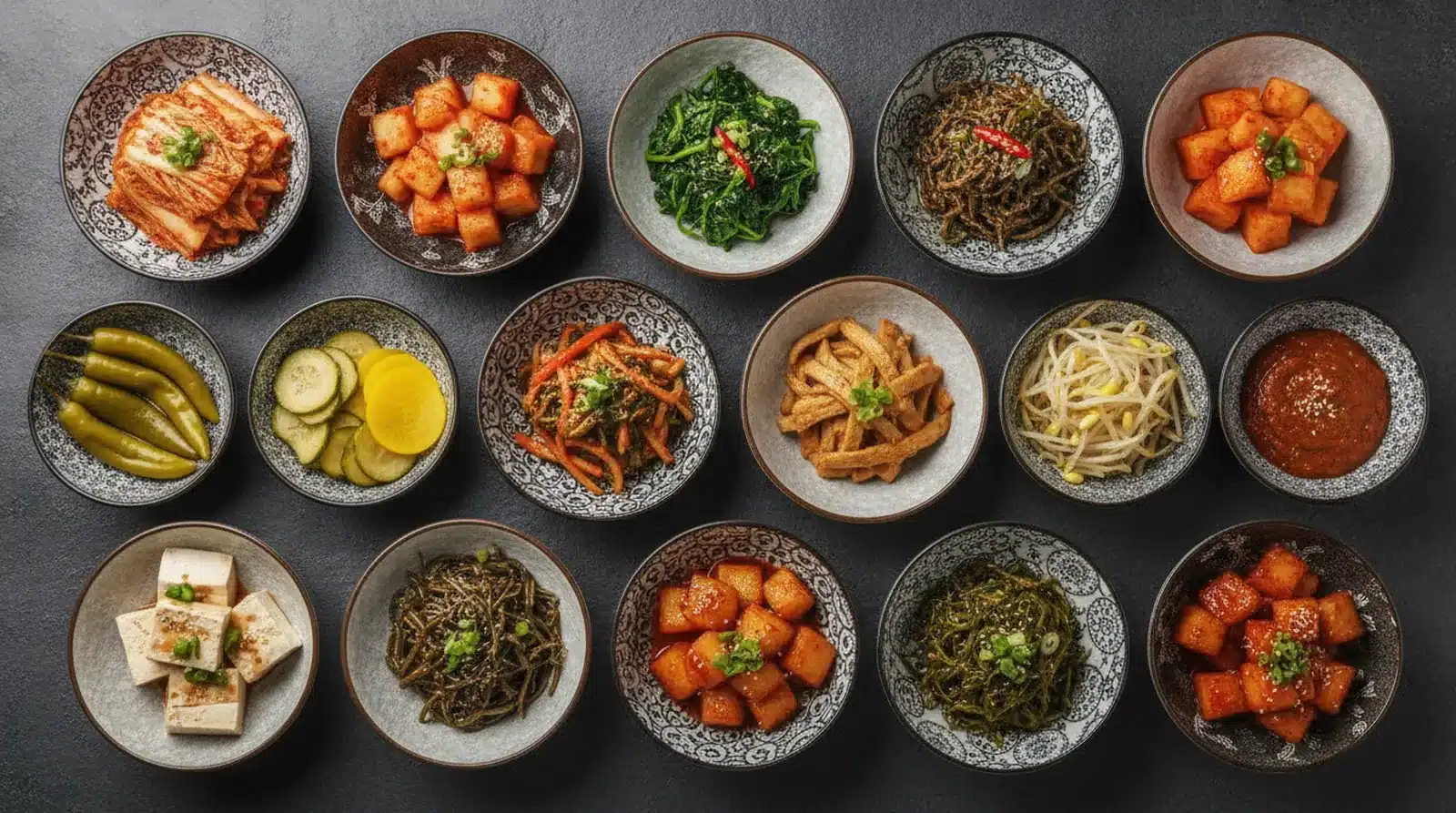
Whenever you like. Banchan sits on the table from the first minute to the last. There’s no starter and no main, no correct order. You pick at them while the meat cooks, you eat them with it, and you carry on after. Nothing is precious.
They’re there to balance the meat. The sharp, fresh ones – kimchi, pickled radish – cut through the richness and reset your mouth between bites. Ssamjang goes inside the wrap. And if you’ve got kimchi, lay a few pieces on the grill next to the pork: it turns soft and a little sweet, and it’s very good. Everything is shared, so reach in whenever.
How to eat it, the ssam way
Korean BBQ is a wrap-it-yourself meal. Take a leaf of lettuce or perilla, add a little rice, a piece of grilled meat, a dab of ssamjang and a slice of raw garlic. Fold it into a parcel and eat it in one bite – that’s ssam, and one bite really is the point.
There’s usually one person tending the grill and cooking for the table rather than just themselves. That’s the whole feel of it. No one’s plating up, everyone’s building their own wraps, and the grill keeps going in the middle. It’s a meal you make together, not one you’re served.
Mild or spicy, your call
Korean BBQ isn’t a spicy meal by default. The grilled meat is mild – the heat comes from the sides and sauces, which means you’re in charge of it.
Keeping it gentle for kids or a spice-shy table? Lean on plain cuts, rice and lettuce, and go easy on the kimchi. Want it fiery? Add a gochujang-marinated cut like spicy pork, more kimchi and some fresh chilli. Because the meat and the heat are separate, one table can happily do both at once – which is handy when the family can’t agree.
A few tips from us
- Let the meat sit out of the fridge for a bit before cooking. Fridge-cold meat sears poorly.
- Get the grill properly hot before the first piece goes on.
- Keep the lettuce cold and crisp in the fridge until you sit down.
- Kitchen scissors beat a knife – cut the meat on the grill, the Korean way.
- Have everything ready before you light it. Once the grill’s going, you won’t want to leave the table.
Frequently asked questions
Charcoal or gas for Korean BBQ at home?
Both work. A butane gas burner is easier and fine indoors with a window open. Charcoal gives more flavour but is slower and better kept outdoors or under a rangehood.
When do you eat the side dishes (banchan)?
Any time. They stay on the table for the whole meal – pick at them before, during and after the meat. There’s no set order, and everything is shared.
Is Korean BBQ spicy?
Not by default. The grilled meat is mild, and the heat comes from the sides and sauces, so you can make it as mild or as spicy as you like.
What cuts should a beginner start with?
Pork belly (samgyeopsal), LA galbi and bulgogi are easy and forgiving. Add a wagyu cut once you’re comfortable.
Can I do Korean BBQ indoors?
Yes, with good ventilation. A butane burner near an open window or under a rangehood works well. Charcoal is better kept outdoors.
How much meat should I buy?
Plan on about 250 to 300 grams per person for a main meal. See our guide on how much meat per person for group sizes and example orders.